I am Aliaa Elmahdy: Luisa
Luisa Batista Samora
Almost 20 years ago, a policeman accosted me on the street because of my clothing. He was wondering if I had any idea what “the men in the square” were saying about me.
Now you might be wondering where I was at the time and what kind of clothes I was wearing. Was I in some foreign country where there are other prevailing standards for women than in our country, or was I walking around half naked?
Would you be surprised if I told you that I was walking along on my lunch break across Weesperplein (Weespersquare) in Amsterdam and that I was wearing a wide red T-shirt with a full-length black skirt? And, of course, ultimately, it is absolutely irrelevant what I was wearing.
This policeman felt the need to tell me that I was bringing about a certain kind of behaviour among the men in the square, because he wanted to protect me, so he said. He would have shown more common sense if he had told those men that they were not behaving in a respectful way towards another human being, in this case a woman.
I filed a complaint against this policeman, which was found valid.
Suppose I was a woman in present-day Egypt. A woman arrested by the police because they feel I am giving offence. Because I am not dressed the way they feel I should be dressed, or because I’m in a place where I shouldn’t be, or because I play music, or paint pictures. I would be spit on and beaten. I would be humiliated in all kinds of ways. I would be forced to undress. I would be “examined” internally because they would supposedly want to know if I am still a virgin. Would I be able to make a complaint? And would my complaint be found valid?
Or just imagine I had been born a girl in Afghanistan. Because I don’t have any brothers, I would have been dressed and treated as a boy. As soon as I reached adolescence, all the liberties I would have had as a boy were taken away, and I would have to live on as a girl with all restrictions involved.
And what if my father and mother were a member of the rigidly orthodox Protestant church somewhere in The Netherlands? Then I would not be allowed to wear pants or cut off my hair. I would have to obey the men within my family and my church. Or what if I lived with my husband in an orthodox Jewish community in Israel? I would have to cover myself from head to toe and wouldn’t be allowed to look up. I wouldn’t be allowed to sit next to a man on the bus. Or what if I grew up in India where a mere rumour about improper behaviour is enough for a woman to be mutilated or stoned to death?
There are many places in this world where women have got far fewer rights than we have got. And sometimes they have got no rights at all. There are many women who aren’t allowed to vote, to go to school, to have a job. Women who are forbidden to go anywhere unless they are accompanied by a brother, son, husband or father. Women who are not allowed to drive a car, to wear pants or short skirts. Women who cannot show their hair or even their faces. Women who can’t decide for themselves whether or not they want children and how many. Women who are not allowed to speak without permission, let alone speak up against someone. Women who are not allowed to play a musical instrument or act on a stage, to paint or go to the cinema.
All the things most people in our society take for granted, are inconceivable for very many women. And in even in our western liberal society of sexual equality, there are still many issues to overcome.
Discrimination on the grounds of sex, skin colour, religion, nationality or any other grounds, is a gross injustice.
I want to show solidarity with all women in the world who are fighting a silent or public battle for equal rights; with the silent ones, with the more visible heroic ones who speak up. With women who show their faces and sometimes also their bodies, like Nadia Larguet and Aliaa Elmahdy.
“If you have a problem with nudity, you are afraid of humanity.” – Amanda Azim on Twitter.
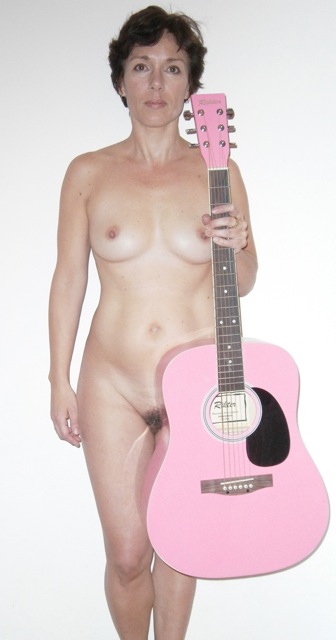
This photo is copyrighted and may not be reproduced in any form or used in any way.
Follow Luisa Samora on Twitter. This is, hopefully, the first of many endorsements of Aliaa Elmahdy, the Egyptian woman who risks the death penalty by showing the world her naked body. This website calls on all the women of the world to shed their clothes in solidarity with Aliaa and all those women who are not allowed control over their own bodies. Please send your statement plus nude photo to Frontaal Naakt.



 RSS
RSS